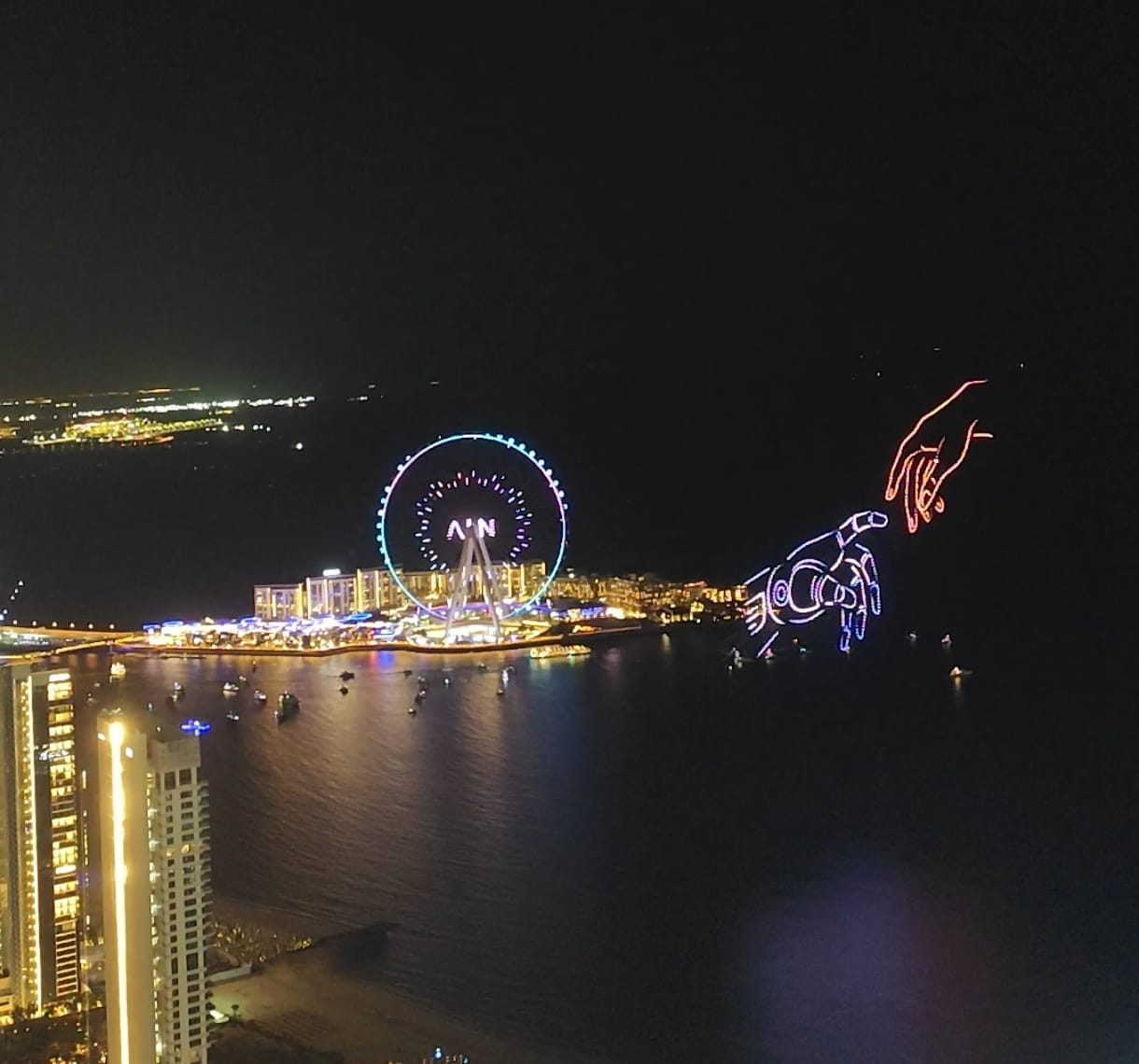
The UAE’s real estate market is entering a more mature phase after years of rapid expansion. The focus is now on sustainable growth, smarter infrastructure, and long-term investment appeal. Dubai and Abu Dhabi remain at the center of this transformation, but other emirates — particularly Ras Al Khaimah — are beginning to play a larger role.
A Market That Continues to Grow
Dubai reached record transaction volumes into 2025, with both ready and off-plan properties. International buyers are mostly attracted by currency stability, tax advantages, and the UAE’s broader economic outlook.
Off-plan sales are a significant share of transactions. Buyers are showing confidence in developers and in the government’s long-term urban planning strategy. Unlike previous cycles, today’s growth is based on population increases, business expansion, and residency reforms.
The Golden Visa and Why It Matters
One of the strongest demand drivers is the UAE’s long-term residency policy, particularly the Golden Visa program. Property investors who purchase real estate above a certain threshold can secure 10-year renewable residency. This visa allows holders to sponsor family members, remain outside the country for extended periods without losing residency, and operate businesses more freely.
For many international buyers, the Golden Visa turns a property purchase into a lifestyle and wealth-management decision rather than a short-term investment. It has significantly expanded the pool of buyers, especially from Europe, South Asia, and increasingly from high-net-worth individuals seeking geopolitical stability.
Infrastructure: The Real Engine Behind Property Values
Infrastructure expansion is arguably the most important factor shaping the next decade of real estate growth.
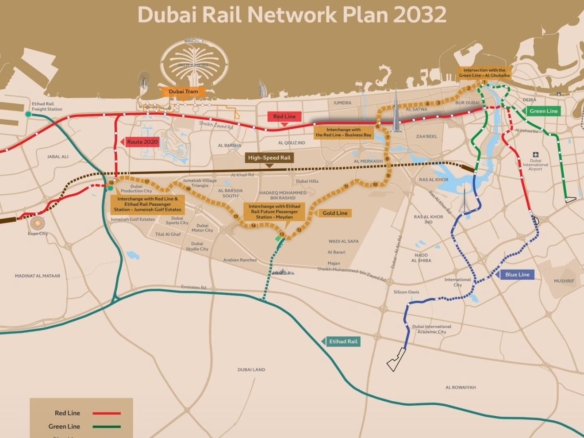
Dubai’s new Metro Blue Line extension will connect emerging residential districts to key commercial hubs, directly increasing accessibility and supporting price appreciation in previously under-served areas.
The Dubai Loop project — an underground high-speed transport concept designed to drastically reduce travel time across the city — reflects the emirate’s ambition to rethink urban mobility entirely.
Air mobility is also moving from concept to pilot phase. Dubai has approved initial plans for air taxi infrastructure, with vertiports planned near major landmarks and business districts. If implemented at scale, this could reshape how prime real estate is defined — placing new value on proximity to vertiport hubs.
On a federal level, the Etihad Rail network is another long-term catalyst. By linking major cities and industrial zones across the UAE, it enhances logistics, tourism, and commuter mobility — strengthening real estate fundamentals beyond Dubai and Abu Dhabi.
Expanding Economy Attracts International Buyers
Business hubs play a central role in attracting real estate investors because they create consistent, long-term demand for both commercial and residential property. When companies cluster in areas such as the Dubai International Financial Centre, Expo City Dubai, or innovation ecosystems like Hub71, they bring employees, entrepreneurs, and service providers with them. This concentration of talent increases demand for nearby apartments, villas, offices, and retail space, supporting rental yields and capital appreciation. Investors are drawn to these districts because strong business activity reduces vacancy risk and creates a more stable tenant base. As the UAE continues to invest in AI clusters, fin-tech zones, and research centers, real estate located close to these employment hubs becomes not just a lifestyle choice, but a strategic, income-generating asset.
Sustainability and Quality of Life as Core Principles
Sustainability is no longer a marketing issue — it is becoming standard practice. Developers are integrating energy-efficient systems, smart home technologies, water-saving infrastructure, and green building certifications in line with the UAE’s Net Zero 2050 strategy.
At the same time, there is growing emphasis on community design: walkability, wellness amenities, green spaces, and mixed-use planning. Buyers are looking for neighborhoods that offer convenience and quality of life, not just square meters.
Luxury developments are increasingly incorporating wellness components such as air filtration systems, spa facilities, and dedicated fitness environments — reflecting global lifestyle trends.
Ras Al Khaimah: A Rising Player
Ras Al Khaimah (RAK) is one of the most interesting markets in the region. The announcement of the Middle East’s first integrated resort with gaming facilities, developed by Wynn Resorts on Al Marjan Island, has significantly raised the emirate’s international profile.
The opening of the Wynn Casino on Al Marjan Island will boost the tourism, and will attract investors and high-net-worth visitors. Major global operators have already entered the market: hotel chains, branded residences, retail, and supporting infrastructure.
Property prices in surrounding areas have already shown increased activity as investors anticipate long-term tourism growth and job creation linked to the resort’s development.
RAK’s relative affordability compared to Dubai, combined with large-scale master-planned waterfront communities, makes it attractive for both investors and end-users seeking lifestyle-driven options.
A More Global Buyer Base
The UAE property market is more internationally diversified than ever. Indian and British buyers remain highly active, but demand is also expanding from continental Europe, Central Asia, China, and Africa.
Due to the pro-business regulation and long-term residency options, the UAE has positioned itself as a safe and practical location for capital preservation.
What the Next Decade May Look Like
Price growth may moderate compared to the sharp increases seen in recent years, but the underlying fundamentals remain strong: population growth, economic diversification, infrastructure expansion, and regulatory stability.
The future of UAE real estate is less about short-term spikes and more about integrated urban ecosystems — connected by advanced transport, powered by technology, and supported by global capital.
With continued investment in mobility projects, innovation clusters, tourism infrastructure, and long-term residency reforms, the UAE is shaping a property market designed not only for today’s investors, but for the next generation of residents and businesses.